Designing AI-driven Interventions for Cancer Screening + Prevention
Introduction
In partnership with Cedars-Sinai Cancer Research Center for Health Equity (CRCHE), this Designmatters studio challenged ArtCenter student teams to research, synthesize, ideate and design an AI-driven navigational tool to help healthcare workers, community organizations and individuals access cancer prevention, screening and care information.
Among the barriers that keep people from getting screened for cancer (fear, confusion, insurance, and more), students also delved into the growing mistrust of AI. Teams addressed how AI can best be presented to healthcare workers and communities leery of this technological advancement so they can feel safe and confident to sign up and receive life-saving screenings.
Instructors led discussions on the ethical ramifications of the evolving new tool, stressing that students always keep the challenge in the forefront: make the cancer screening process easy, efficient and understandable.
Quote
“We had many conversations about the transparency around AI usage and its limitations. Each tool and project needed to be really clear about what their AI-enabled features can and can’t do.”
– Christine Sheller, instructor
Research and Project Development
At the kickoff, the Cedars team presented students with an overview of their work to help people live healthy lives. The CRCHE works with Community Outreach and Engagement (COE), bringing together researchers and stakeholders to provide underserved communities with cancer-related education, screenings and care.
CRCHE conducts research and gathers cancer-related data to understand how best to mitigate disparities in underserved communities; this work is extremely important today since navigating healthcare is often complex and public health budgets are cut thin which reduces community health programs and outreach professionals who directly engage with those community members. Students learned about mortality rates in different Southern California locations and how the CRCHE serves 12 million people.
Cedars works with established community organizations and faith-based groups for their outreach that includes on-the-ground health navigators, important individuals who are trained to connect with community members about cancer and health. These navigators are culturally diverse and often are part of the local Latinx and Korean communities they serve.
Students learned the top cancers in Cedars’ targeted geographical areas from South Central to Antelope Valley: breast, prostrate, colon and lung. Navigators’ work often addresses smoking issues, while encouraging mammogram and colon screenings, and other educational workshops.
Cedars discussed how AI tools can assist and increase participation in cancer prevention programs, especially supporting navigators in their community work. The challenge, however, is to how incorporate an ethical use of AI that addresses the overreaching mistrust and confusion of the technology, and the fear that health care will be replaced by the impersonal AI. The goal for students is to be culturally sensitive when using AI for educational materials. Information sourcing and data privacy must be transparent.
Navigators deal with other barriers from community members:
- Not familiar with cancer and science verbiage
- Financial constraints
- Transportation
- Housing costs, especially for ongoing cancer patients
- Child care
Cedars described the training process for their navigators: they are educated about the predominate cancers, learn how science has created screenings for those cancers, and the available clinical trials that can reveal new methodology. Navigators work with trusted local organizations such as churches and cultural groups to meet and connect with community members.
QUOTE
“Trust isn’t building through accuracy alone. It emerges when communication aligns with cultural context and also supports emotional safety.”
– Yvonne Dang, Creative Direction student
Divided into teams, students digested data from CRCHE research as they delved into specific communities’ health challenges, cultural values and needs. Cedars representatives meet virtually with the class to discuss their work in the cancer navigation field. Students had access to Cedars data which provided a strong foundation for their research.
Students interviewed health navigators and heard first-hand about the challenges and opportunities they face especially serving in ethnic communities.
Teams examined community perspectives surrounding AI, and learned about the development of AI and its use from ArtCenter experts. Teams also explored how AI has been used in health care-related communications, noting what worked and what didn’t, and how they can build on this precedent.
Secondary research delved into the cancer screening disparities between immigrant and U.S.-born communities, especially higher levels of such cancers as cervical, breast and colorectal.
Teams also learned practical documentation of resources, and how to be intentional when they cite other work, asking about a piece of data, ‘Where did this come from?’
Five weeks after the kickoff, students met with Cedars for a research review, a check-in to make sure teams were in sync with the values and needs of Cedars navigators. Teams shared their initial research focus, early findings, research activities, early ideas and three insights that could point them toward a design direction.
Students demonstrated their AI learning. “Knowing when AI should step back” and “AI needs to help not take over,” were important conversation topics. Student teams also addressed privacy concerns when it came to collecting personal health data; they also focused on how AI data cannot be presented as medical advice, only suggestion and direction. Overall, having a human component was vital to their designs.
Team received tangible feedback from Cedars reps which helped students confirm their design directions. To prepare for the midterms, they continued collecting research, honing rough ideas and updating simple sketches. They envisioned personas, a particular segment of their targeted population, to keep the needs of their audience front and center. When designing a user journey map, students investigated the everyday behaviors of their target audience – where do they shop? How do they commute? What stores do they frequent? How are they connected into regular community activities?
At midterms, teams offered three concepts that involved a targeted population and region where Cedars’ navigators are embedded.
Cedars enthusiastically responded with practical comments and suggestions; they noted how the students’ concepts involved a light touch, a gentle nudge that did not use fear as a motivator, but rather a friendly voice that understood the trepidation about cancer and AI.
After the midterm, teams turned their attention to execution and production. They created graphics and character designs that would appeal to their target group. They strived to not over-design, but employed minimalistic text to be functional, appealing and culturally appropriate. They created wire frames for applications analyzing all possible answers/questions, imagining how the user’s journey could be easy and informative.
Teams created prototypes, billboard and brochure renderings as well as giveaway materials such as tote bags, key chains, etc.
As part of their final presentations, each team described three next steps if they were to continue to develop their projects.
Outcomes
 close
close
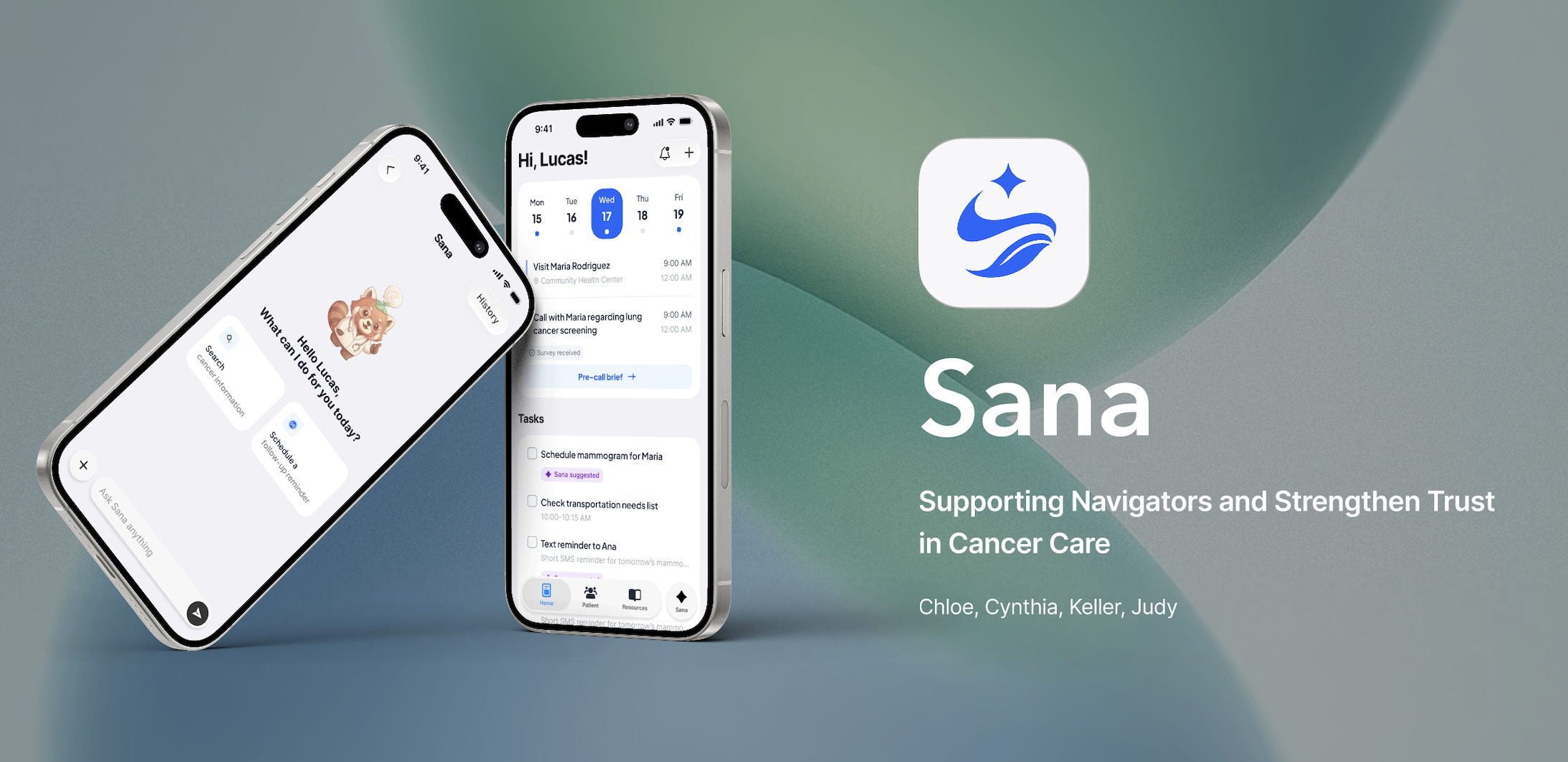
Sana
Read moreCynthia Du, Chloe Wang, Keller Wang, Judy Zhu
An app that supports the community navigator’s busy duties, Sana organizes important elements in one centralized system: a to-do schedule, client outreach history and up-to-date cancer information. The dashboard features a snapshot of the day’s appointments with follow-up suggestions. Designed as an invaluable assistance tool, Sana helps navigators manage patient care by collecting important patient/client information (that does not infringe on privacy) including notes on phone calls, language needs and upcoming screenings/follow-up needs. AI helps navigators with pre-call surveys, conversation guides and post-call ratings that informs future connections.
 close
close
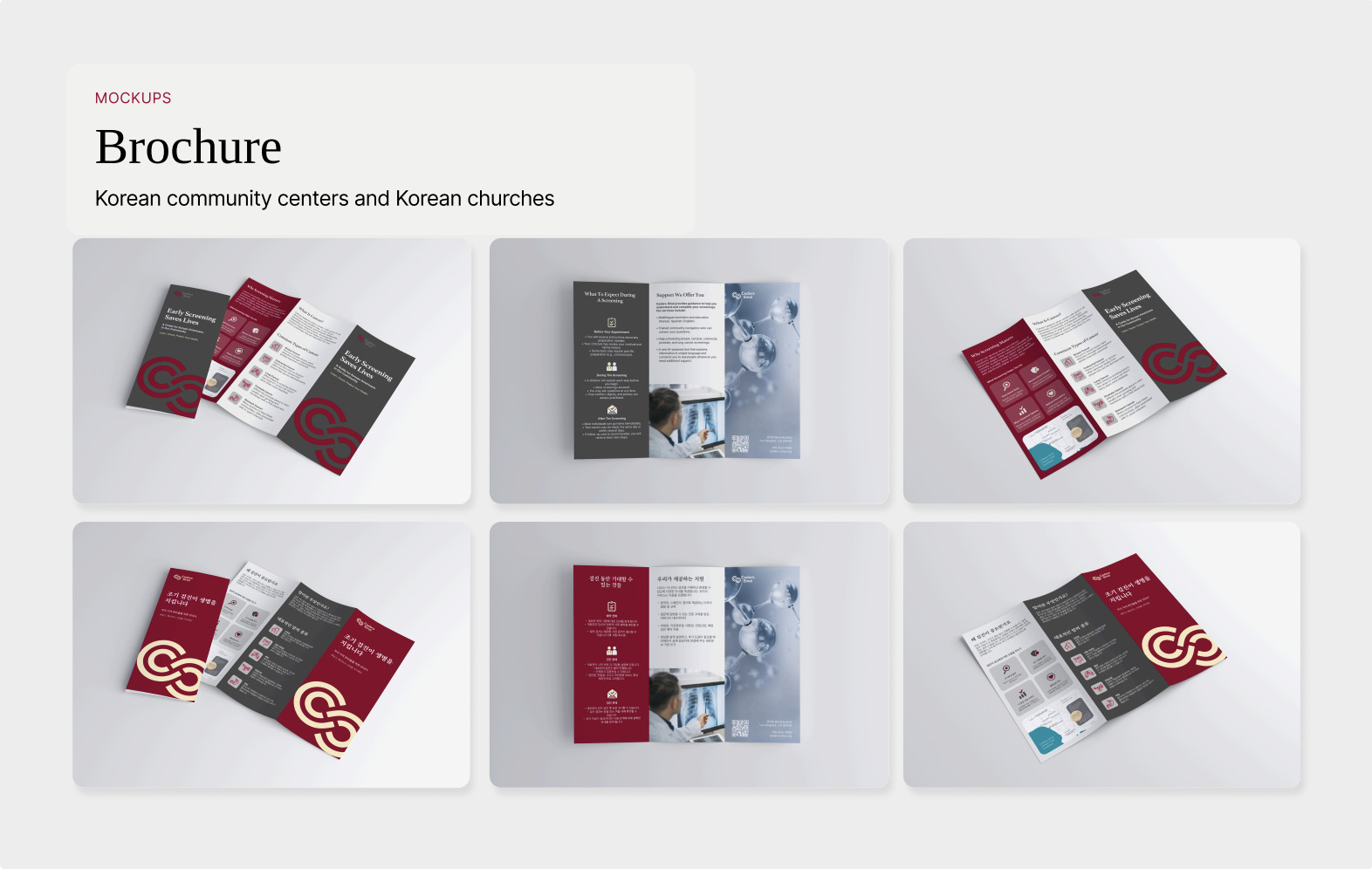
Korean Chatbot
Read moreYvonne Dang, Jasmine Li, Elena Shi, Coco Yin
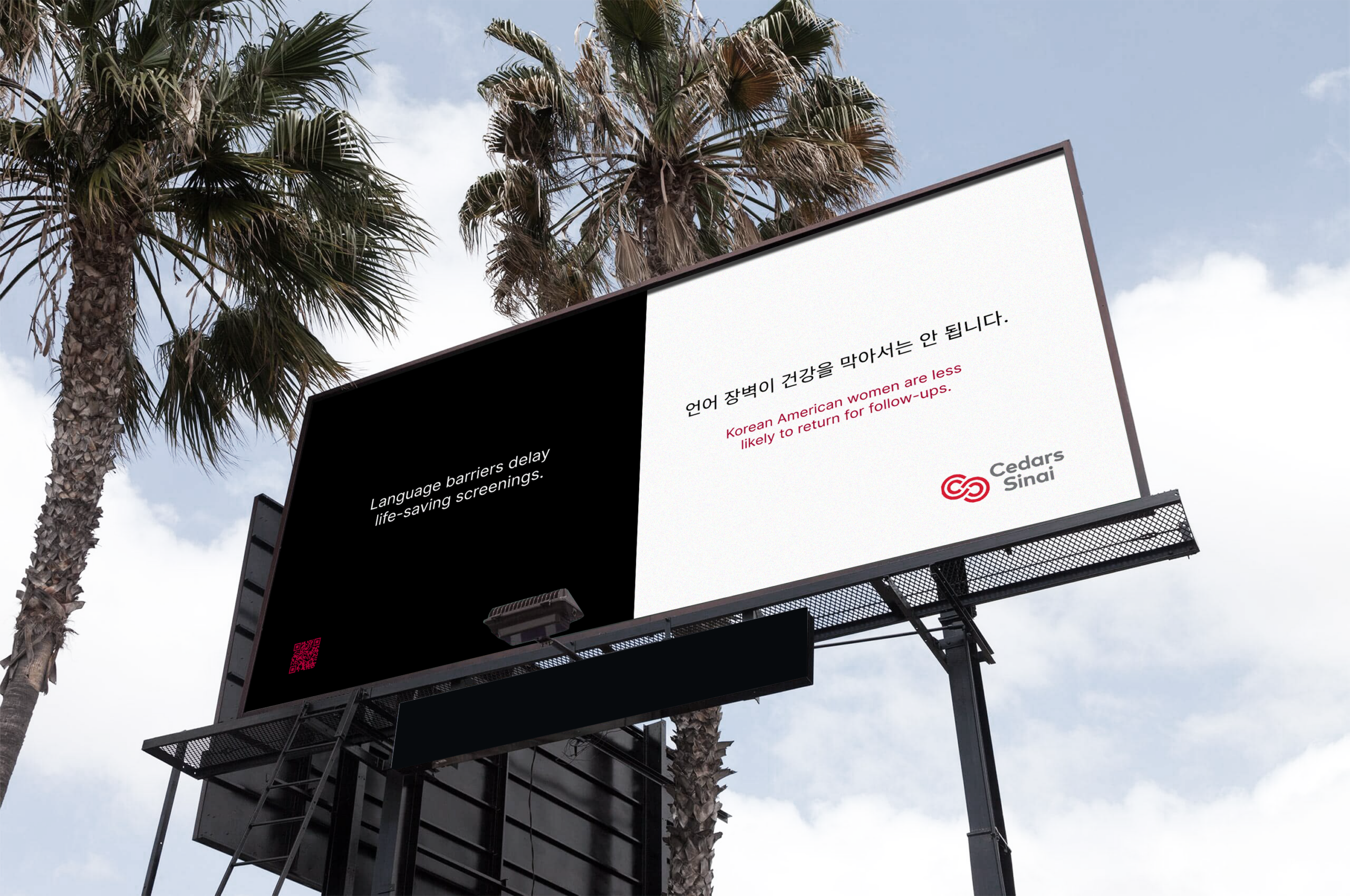
To address language and cultural barriers, this Korean language chatbot on the Cedars-Sinai website offers culturally appropriate responses to reduce confusion and encourage cancer screenings. Providing educational information, the chatbot gently guides users in setting up screenings and offers FAQs and video references related to specific inquiries. Ancillary brochures and billboards target the Korean communities with simple graphics and Korean text that encourage viewers to learn more about the screening process – that bring them back to the Cedars-Sinai website and the chatbot.
 close
close
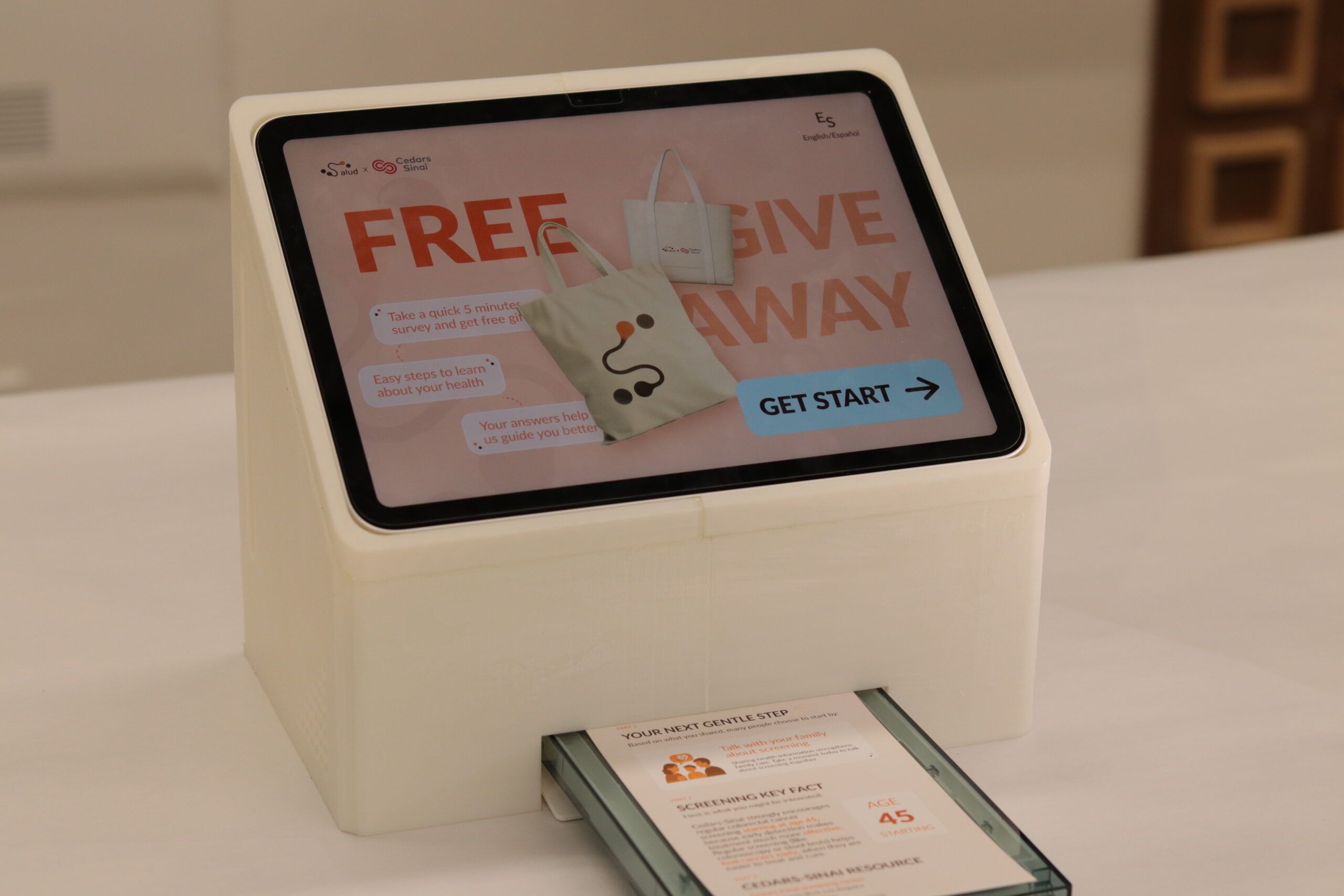
Salud Station
Read moreBalinda Bai, Sabrina Chen, Lanna Hu, Max Wang
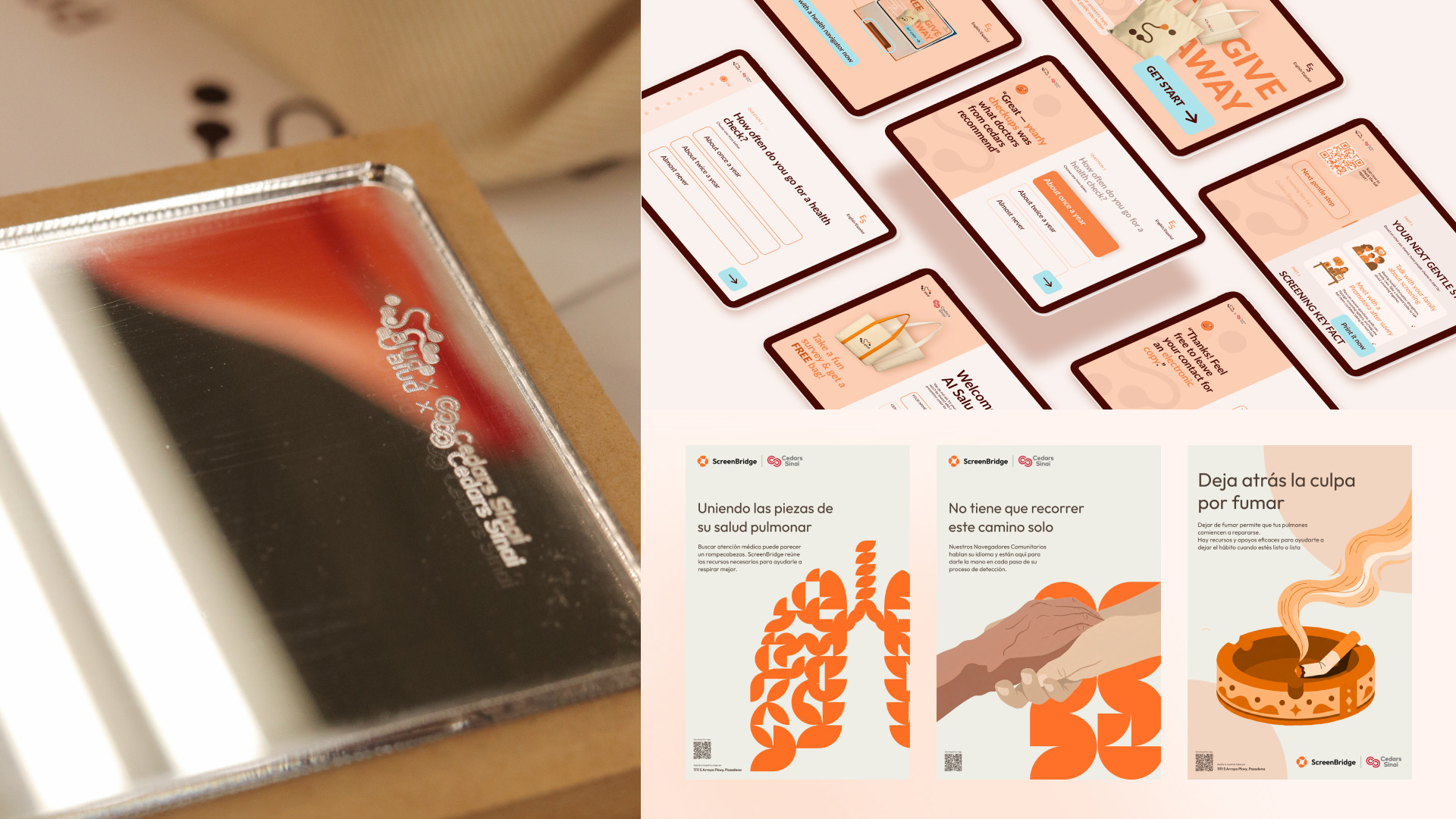
To reach community members at a familiar and trusted location, the Salud Station is installed at local Ralph’s Grocery stores. A greeter encourages shoppers to fill out a short questionnaire on a touchpoint screen. After answering a series of short questions about their knowledge of cancer and their health history, users receive a paper summary ticket. This physical reminder gives them a chance later to talk with a health navigator. Shoppers receive gifts for completing the survey such as tote bags, portable mirror and keychains.
 close
close
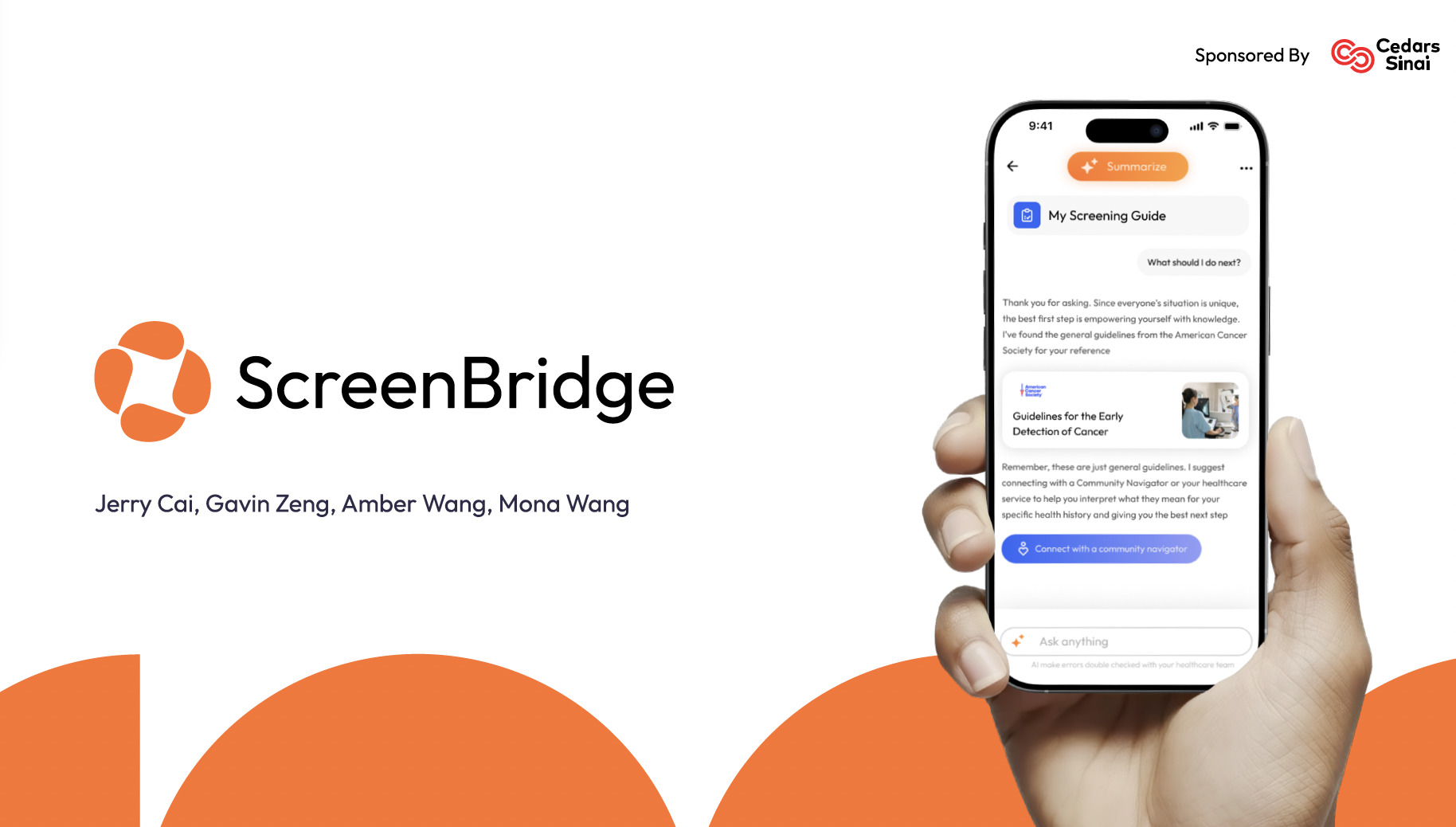
Screen Bridge App
Read moreJerry Cai, Amber Wang, Mona Wang, Gavin Zeng
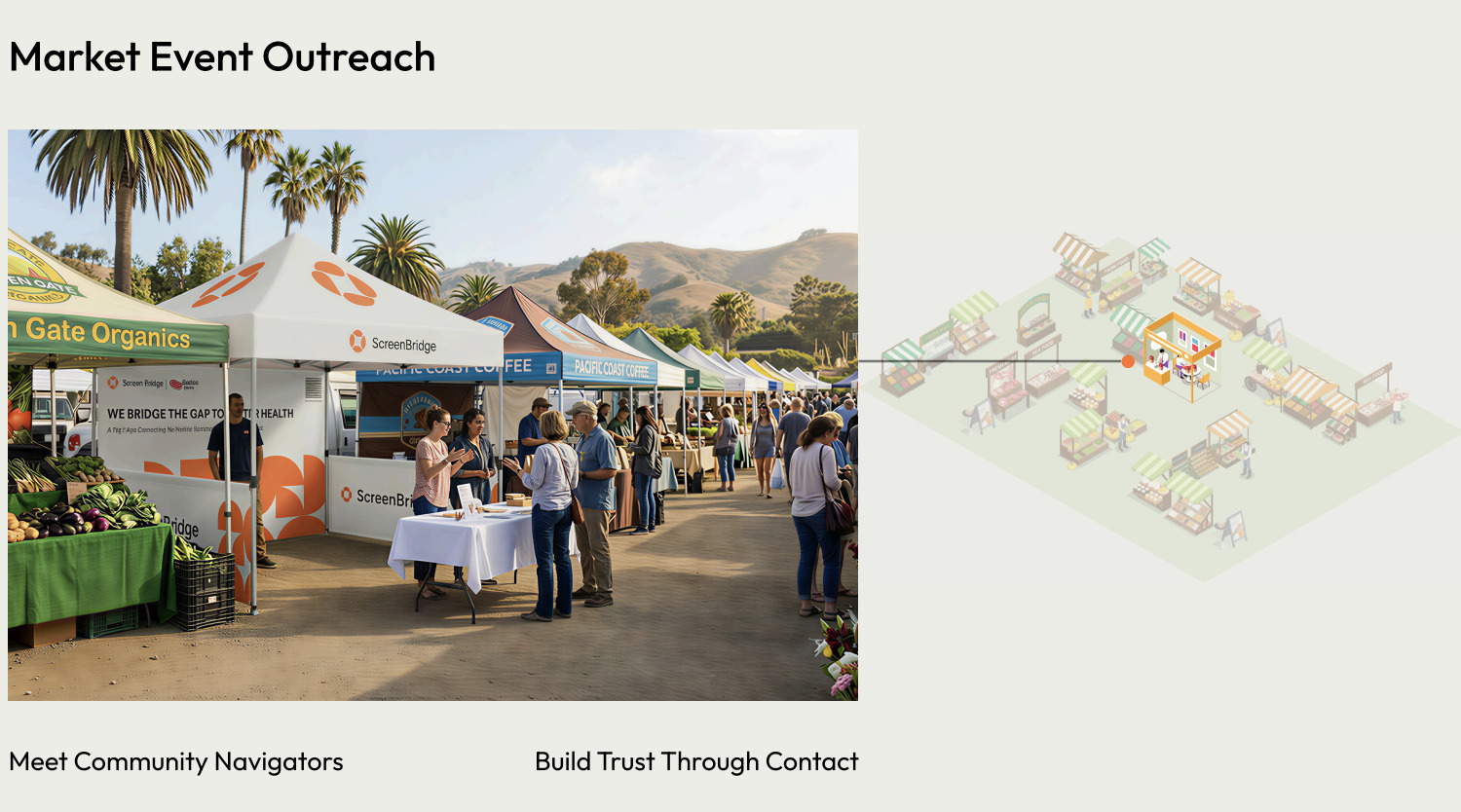
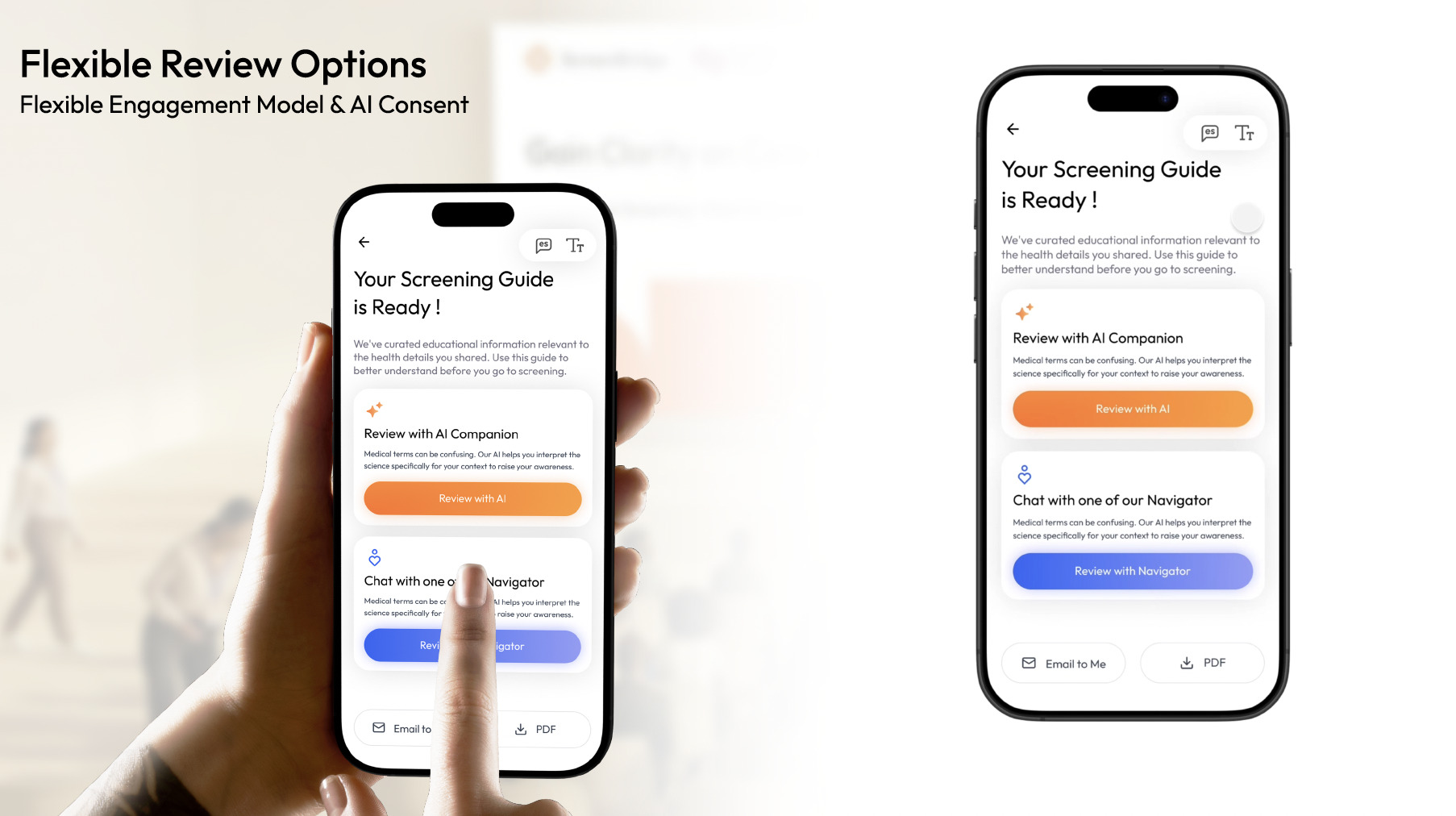
This three-pronged approach involves physical promotional posters, outreach at a local farmers market and a Screen Bridge app; each stage offers a new layer of cancer screening related information. At the onsite location, multiple small stalls feature cancer screening literature and colorful cards to collect; however only at the main outreach table can guests receive a special card. This table is also where navigators assist community members to download and access the Screen Bridge app. On-boarding with a live person helps users start the process with trust. Users take a short survey and create a screening guide that connects them with navigators. Before they leave the booth, guests receive tote bags, pins badges and quit smoking kits.